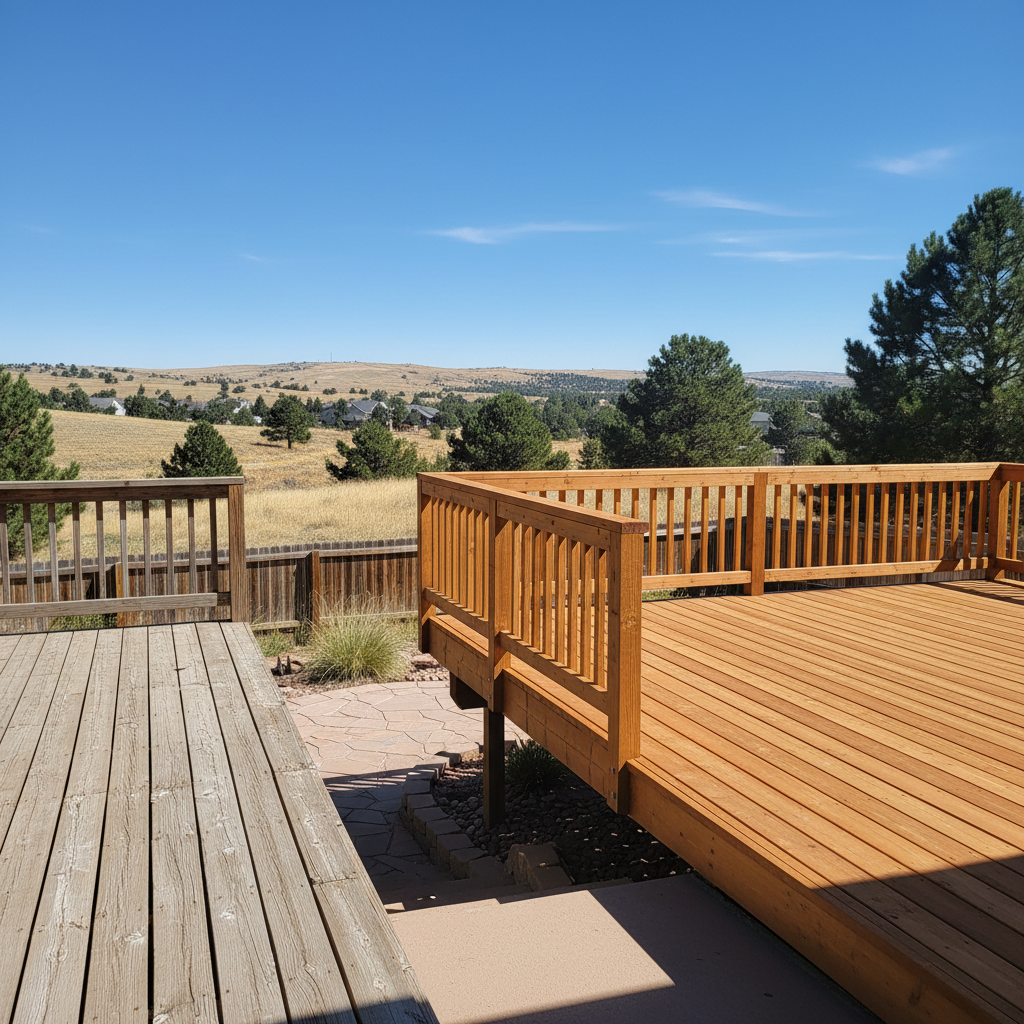
Your deck's seen better days, right? Maybe it's got a few soft spots, some boards are rotting, or it just feels a little wobbly underfoot. When that happens, homeowners usually figure they've got two main choices: either patch up the bad bits or tear the whole thing down and start fresh. I see this constantly here in Highlands Ranch, and honestly, both approaches have their place. But knowing which one is right for *your* situation can save you a ton of grief and cash down the road.
Patching Up Your Deck: The Quick Fix Route
Let's talk about patching first. This means you're only replacing the damaged parts – maybe a few rotten deck boards, a railing post that's seen better days, or some worn-out stair treads. It's often the first thing people think of because, on the surface, it looks like the cheapest and easiest option. And sometimes, it absolutely is.
Cost: Generally, patching costs less upfront. You're buying fewer materials, and the labor hours are usually lower. If you're just swapping out five or ten deck boards, that's a much smaller bill than building a whole new structure, isn't it?
Durability: This is where things get a bit tricky. How long a patch job lasts really depends on the overall condition of the rest of your deck. If you've got a solid, well-built frame that's still in great shape, and only a few surface boards are bad, then those new boards will last just as long as the originals did. But if you're patching a few bad spots on a deck that's got widespread rot in the joists or ledger board, those new patches are just going to be sitting on a failing foundation. You'll probably be patching again sooner than you think.
Maintenance: Maintaining a patched deck is pretty much the same as any deck – regular cleaning, staining, or sealing. The challenge comes if your new boards don't quite match the old ones, either in material or age. You might notice different weathering patterns, which can make staining a bit of a chore to get an even look.
Appearance: This is another big one. Unless you're using the exact same material, age, and finish as your existing deck, a patch job can really stick out. New pressure-treated lumber, for instance, looks a lot different than old, weathered boards. Even if you stain it, you might see color variations. For some folks, that's no big deal. For others, it's a real eyesore.
Full Deck Rebuild: Starting Fresh
Now, a full rebuild means tearing everything down, right to the foundation, and building a brand new deck. It's a bigger commitment, no doubt, but it often makes more sense in the long run. Especially with the kind of weather we get here in Highlands Ranch – those intense sun and snow cycles can really do a number on wood over time.
Cost: A full rebuild is definitely more expensive upfront. You're paying for demolition, new materials for the entire structure (frame, decking, railings, stairs), and more labor hours. There's no getting around that fact.
Durability: This is where a rebuild truly shines. You're getting a completely new structure, built to current codes, often with updated materials that might be more resistant to rot and insects. You know exactly what's underneath your feet. You're starting with a clean slate, and if you pick quality materials, you're setting yourself up for decades of enjoyment. This is especially important for the substructure – the posts, beams, and joists. If those are compromised, you're just putting lipstick on a pig with a patch job.
Maintenance: With a new deck, maintenance is straightforward. Everything is new, so it all weathers consistently. You'll apply your first stain or sealant evenly, and future maintenance will be much simpler because you're dealing with a uniform surface and structure.
Appearance: You get a brand new, cohesive look. You can choose modern materials, different colors, or even change the layout or size if you want. It's a chance to really upgrade your outdoor living space and boost your home's curb appeal. No mismatched boards or weird color variations here.
My Recommendation for Highlands Ranch Homeowners
Here's the deal: if your deck is less than 10-15 years old, and you've only got a handful of clearly isolated rotten boards or a single wobbly railing, then a targeted patch job might be perfectly fine. We can usually match materials pretty well, and you'll get a few more good years out of it.
However, if your deck is older than 15-20 years, or if you're finding soft spots in multiple areas, or if the frame itself looks compromised – maybe some posts are sinking, or the joists are showing significant rot – then I'm almost always going to recommend a full rebuild. Our freeze-thaw cycles and those dry, sunny summers here in Colorado are tough on decks, especially if they weren't built with proper drainage or quality materials from the start. I've seen too many homeowners in communities like BackCountry or Stonegate try to patch a deck that's clearly past its prime, only to have more problems pop up a year or two later. You end up spending more money in the long run than if you'd just done it right the first time.
A full rebuild gives you a safer structure and a beautiful, consistent look that adds real value to your home. It's an investment, for sure, but it's one that pays off in safety, longevity, and enjoyment. Give us a call at Highlands Deck & Pergola, and we can come out, take a look at your deck, and give you an honest assessment of what makes the most sense for your situation.